Hungary has moved from “emerging destination” to one of Central Europe’s most dynamic tourism success stories, with record visitor numbers, growing medical travel, and ambitious targets for the end of this decade. Recent data shows that the country is not only recovering from past shocks but reshaping itself as a year‑round destination for culture, wellness, and value‑for‑money city breaks.
Overview of Tourism to Hungary Today
According to the Hungarian Tourism Agency, 2024 closed as a record year with around 18 million guest arrivals, split between approximately 9.3 million domestic and 8.7 million international visitors. These guests generated about 44.2 million overnight stays, with foreign tourists accounting for roughly half of all guest nights. Accommodation revenues reached around HUF 1,050 billion in 2024, up about 16 percent from the previous year, while hospitality (food and drink) revenue rose by around 11 percent.
Budapest remains the engine of inbound tourism: the capital drew close to 6 million foreign visitors in 2024 and now accounts for around 60 percent of the guest nights spent by international tourists in the country. Passenger traffic at Budapest’s Liszt Ferenc International Airport reached roughly 17 million in 2024, growing by more than 17 percent year‑on‑year and underlining the strength of air connections. Beyond the capital, spa and lake destinations such as Lake Balaton, Hévíz, Siófok, Hajdúszoboszló and Balatonfüred continue to attract millions of guests annually.
Key Tourism Statistics and Economic Weight
Tourism is now a major pillar of Hungary’s economy, and recent figures highlight just how central it has become.
-
In 2024, around 18 million guests represented an 11 percent increase in visitor numbers compared with 2023.
-
Overnight stays exceeded 44 million, growing faster than in many other EU destinations and indicating longer or more frequent visits.
-
Spending by foreign tourists is estimated to account for roughly 6.5 percent of Hungary’s GDP, underscoring the sector’s macroeconomic importance.
-
The Hungarian Tourism Agency has set a target of reaching 20 million guests and 50 million guest nights annually by 2030, and current growth suggests these milestones could be met even earlier.
2025 has already continued the upward curve: in January alone, Hungary recorded over 1 million visitors and nearly 2.3 million overnight stays, with international arrivals up 29 percent compared to January 2024. Early 2025 data for Budapest points to a 24 percent jump in international arrivals in February and double‑digit growth in Lake Balaton, indicating strong momentum across both urban and resort areas.
Who Visits Hungary? Main Source Countries
Hungary still relies primarily on regional markets, but its visitor base is gradually widening.
Analyses of inbound tourism show that most foreign guests arrive from other European countries, especially:
-
Germany
-
Romania
-
Italy
-
United Kingdom
-
Austria
These five markets remain core sources of visitors for city breaks, spa holidays, and summer stays at Lake Balaton. Additional demand comes from neighbouring Slovakia, Czech Republic, and other Central and Eastern European countries that benefit from relatively short travel times.
At the same time, Hungary is seeing growing interest from more distant regions. Tourism reports note increasing arrivals from countries such as China and other Asian markets, helped by targeted marketing campaigns and efforts to expand long‑haul flight connections. For many international visitors, Budapest is the anchor attraction, but itineraries increasingly combine the capital with wine regions, national parks, or lakeside towns.
The Role of Medical Tourism
Hungary has quietly become one of Europe’s most established medical tourism hubs, particularly in dental care and related fields. While medical travellers represent only a slice of total visitor numbers, their economic contribution per person is significantly higher than that of an average leisure tourist.
Historic data suggests that Hungary welcomed roughly 45,000 medical travellers in 2017, with demand focused on dental, cosmetic, and fertility treatments. Industry sources have long noted that Hungary accounts for around 40 percent of the European Union’s dental tourism and approximately 21 percent of global dental tourism, reflecting a deep concentration in this niche.
Core characteristics of Hungary’s medical tourism sector include:
-
Strong focus on dental treatments (implants, full‑arch restorations, cosmetic dentistry) alongside plastic surgery, ophthalmology, and fertility services.
-
Modern clinics and hospitals, many equipped with digital diagnostics and international accreditation.
-
Treatment costs that are often significantly lower than in Western Europe or the United States, even after accounting for flights and accommodation.
Medical tourists primarily come from:
-
Germany and Austria, which have historically supplied a large share of Hungary’s international patients, especially for dental care.
-
The United Kingdom, Italy, and Scandinavian countries, whose residents seek more affordable treatment than at home.
-
Other European and Balkan markets, including neighbouring countries that value proximity and the reputation of Hungarian clinics.
Recent tourism outlook reports emphasise medical tourism as one of the sectors driving Hungary’s broader tourism boom, alongside wellness, spa, and thermal bath experiences.
Where Tourists Go: Main Destinations
Although visitors are increasingly exploring the countryside, a few key regions still concentrate the majority of tourism activity.
-
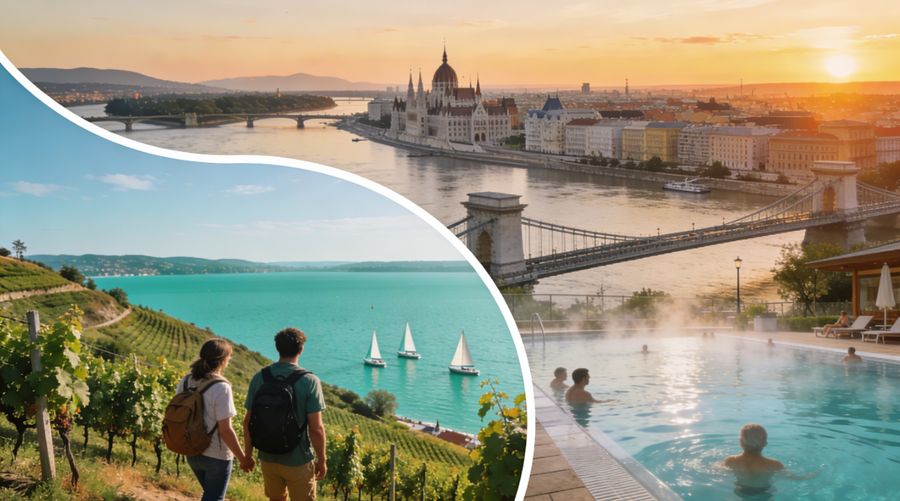
Budapest: The capital is the primary magnet for foreign tourists, offering architectural landmarks such as the Parliament, Buda Castle, thermal baths, ruin bars, and a dense restaurant scene.
-
Lake Balaton: Often called Hungary’s “inland sea,” Balaton draws more than 3 million guests annually, with popular resorts like Siófok, Balatonfüred, Tihany, and Keszthely.
-
Spa and wellness towns: Hévíz, Hajdúszoboszló, Zalakaros, and others specialise in thermal waters, medical spas, and rehabilitation, attracting both leisure and health‑focused travellers.
-
Wine regions and countryside: Areas such as Tokaj, Eger, and the Balaton Uplands are benefiting from the rise of rural tourism, wine tourism, and active travel like cycling and hiking.
This mix allows Hungary to appeal to different segments—from short‑stay city‑break travellers to families on lakeside holidays and patients on week‑long dental or wellness trips.
Future Trends Shaping Tourism to Hungary
Analysts see Hungary’s tourism growth continuing over the medium term, with several structural trends likely to shape how and why travellers visit the country.
Continued Growth and Full Recovery
Tourism market forecasts expect visitor numbers to keep rising, with 2026 projected as the year when international arrivals fully recover to, and potentially exceed, pre‑2019 levels. Growth is projected to average through 2025–2029, driven mainly by regional European travel but increasingly supported by long‑haul markets.
Ambitious national targets—20 million guests and 50 million guest nights annually, and tourism contributing at least 16 percent of GDP—underscore expectations that the sector will remain a priority in Hungary’s economic strategy.
Stronger Position in Medical and Wellness Tourism
Medical tourism is expected to retain a central role, given Hungary’s established reputation in dental care and wellness. Several trends support this outlook:
-
Ageing populations in Western Europe increasing demand for implants, prosthetics, and other complex dental procedures at competitive prices.
-
Growing awareness of thermal and wellness treatments, with Hévíz and other spa towns positioning themselves as year‑round destinations.
-
Continued investments in clinic infrastructure, international accreditations, and cross‑border partnerships that build patient trust.
Given its high market share in European dental tourism, Hungary is likely to remain a reference point for patients seeking cost‑effective, high‑quality treatment combined with a city or spa break.
Diversification of Source Markets
While Germany, Romania, Italy, the UK and Austria will remain core markets, recent growth figures highlight emerging demand from new regions. Hungary has stepped up marketing efforts in Asia and is working to expand air links, including more direct long‑haul flights to Budapest.
If these initiatives continue, the country could gradually reduce its dependence on a narrow band of regional markets and welcome more visitors from North America and East Asia who combine Hungary with multi‑country European itineraries.
Rise of Sustainable and Rural Tourism
Policymakers and sector organisations are promoting sustainable and active tourism as a strategic priority. This involves:
-
Developing hiking and cycling routes, including long‑distance trails and lake‑circling paths at Balaton and other water bodies.
-
Highlighting national parks, protected wetlands, and landscapes such as the Balaton Uplands as alternatives to purely urban tourism.
-
Encouraging investment in smaller rural accommodations and experience‑based tourism, from farm stays to wine tastings.
These initiatives respond to changing traveller preferences, especially among younger visitors who value nature, authenticity, and lower‑impact travel.
Investment in Infrastructure and Services
The government and industry stakeholders are also investing in infrastructure that directly supports tourism. Plans include:
-
Establishing a dedicated tourism bank to finance sector projects, especially mid‑range hotels in Budapest and regional areas.
-
Upgrading transport links, including roads, in‑country rail services to key destinations like Lake Balaton, and airport facilities.
-
Enhancing digital tools and data‑driven tourism management to better match supply with demand and smooth seasonal peaks.
Together, these measures aim to make Hungary more resilient to shocks while ensuring that the visitor experience keeps pace with rising expectations.
Outlook: Why Hungary’s Tourism Story Matters
Hungary’s recent tourism performance shows a country leveraging its strengths—Budapest’s iconic architecture, a deep spa culture, accessible pricing, and specialised medical services—to position itself as a versatile European destination. The balance between domestic and international guests adds stability, while ongoing investments suggest that tourism will remain one of the most dynamic parts of the national economy.
As international travel patterns continue to evolve, Hungary’s combination of heritage city, lakeside resorts, rural landscapes, and strong medical tourism offer a diversified base for future growth. For visitors, that means more choice and better infrastructure; for the country, it means tourism is set to play an even larger role in both economic performance and international visibility over the coming decade.