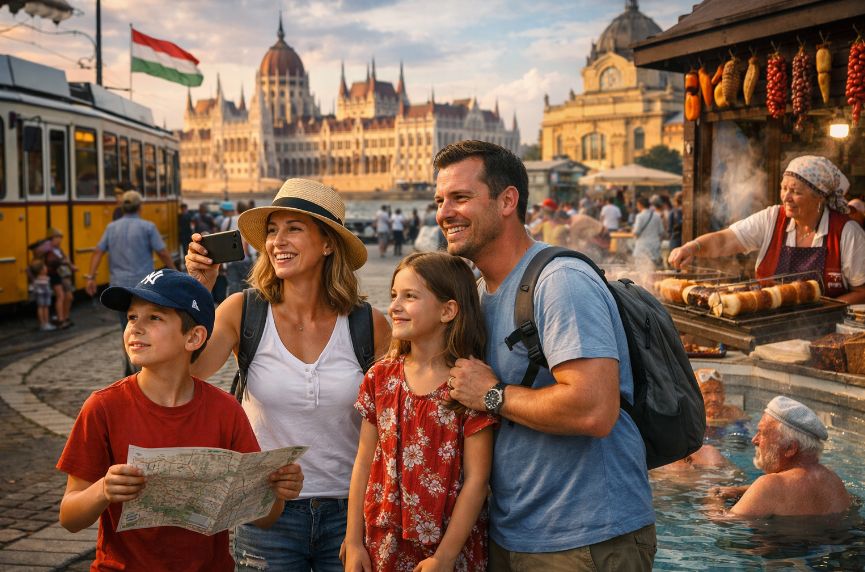
Budapest doesn’t just sit quietly on the Danube; it glows with it. Historic bridges sweep across the river, thermal baths puff steam into the air, cafés hum with espresso chatter, and the city’s bold blend of East and West fascinates visitors from every corner of the world. For Americans, however, Budapest can feel like a riddle wrapped in paprika — familiar, yet just foreign enough to trigger a series of cultural surprises that range from delightful to confusing.
Hungary’s capital mixes imperial elegance with raw authenticity. Nothing here fits neatly into American habits: not the dining hours, not the concept of friendliness, not even the way people cross the street. But these cultural quirks are also what make the experience unforgettable.
Let’s uncover the most common culture shocks Americans face in Budapest — and, more importantly, how to embrace them like a true local.
1. The Reserved Hungarian Personality
The Shock:
Many Americans are struck by how reserved Hungarians can seem. Smiles don’t come easily; small talk with strangers is rare, and social interactions tend to start cool before warming up slowly. In Budapest cafés or metro stations, it may even feel like people are ignoring you on purpose.
Why It Happens:
Hungarian culture values authenticity and privacy. Historically, decades of political tension — from wars to communism — encouraged people to keep their emotions guarded. Generations grew up believing that openness should be earned, not given freely. Where an American might think a friendly “How’s your day?” is basic politeness, a Hungarian might see it as superficial small talk.
How to Adapt:
Don’t take it personally. Hungarians are cautious but deeply loyal once trust forms. Focus on genuine, meaningful conversations. If you learn a few Hungarian words like szia (hi) or köszönöm (thank you), you’ll instantly earn respect. Most locals speak English, especially in Budapest, but showing effort bridges the gap faster than exaggerated friendliness ever could.
Pro tip: If someone invites you to their home, that’s a big deal — it means you’ve crossed the invisible line from visitor to trusted friend.
2. Public Silence and Personal Space
The Shock:
Public transport in Budapest is quiet — almost solemn compared to the chatter you might hear on a New York City subway. People rarely talk loudly on phones, and even laughter is subdued. Meanwhile, standing too close in a line or on a tram can make locals uncomfortable.
Why It Happens:
Privacy is a cultural cornerstone. The Hungarian notion of respect involves minding one’s own space. Loudness is often viewed as inconsiderate, and drawing attention in public feels awkward.
How to Adapt:
Lower your voice when chatting or making calls. Learn to enjoy the unspoken rules of public courtesy. You’ll notice how freeing it feels to travel without noise overload. By blending in, you’ll find yourself understanding Hungarian nonverbal communication better — a small nod or a polite smile often says more here than words.
3. The Pace of Life and the Meaning of Time
The Shock:
Americans often feel that Hungarian time runs slower. From restaurant service to government offices, things unfold in a calm, deliberate rhythm. Asking for the check in a Budapest café can mean waiting a while — not because the waiter forgot you, but because lingering over coffee is part of the culture.
Why It Happens:
Hungarians value the experience of doing something, not the speed of completing it. Meals are social events, not tasks. Punctuality matters, but efficiency is secondary to atmosphere and relationship.
How to Adapt:
Shift your expectations. Enjoy the slower pace as part of the journey. When dining, ask for the bill directly (Kérem a számlát, legyen szíves — “Please bring the bill, if you’d be so kind”) instead of assuming it comes automatically.
Try to balance your American sense of time with Hungarian ease — there’s no rush to enjoy life here.
4. Currency Confusion and the Cost of Living
The Shock:
Many Americans arrive assuming Hungary uses the euro, only to find out it doesn’t. The Hungarian forint (HUF) is still the national currency, and its large denominations can seem intimidating. Paying 5,000 forints for lunch might sound outrageous until you realize it’s roughly $13.
Why It Happens:
The forint has low numerical value compared to the dollar, leading to prices that look high but aren’t. Foreigners sometimes confuse the math and either overpay or panic about the wrong totals.
How to Adapt:
Download a currency converter app and round mentally — 1,000 HUF roughly equals 2.5 to 3 USD (depending on rates). Most places accept credit cards, but small markets and countryside restaurants may prefer cash. Keep small bills handy, since tipping and change are often expected in coins.
And here’s the good news: Budapest offers outstanding value. You can dine at an elegant riverside restaurant, soak in thermal baths, and still spend less than in most major American cities.
5. Tipping and Service Etiquette
The Shock:
Service expectations differ noticeably. In Hungary, tipping is customary but modest: usually 10% to 12%. However, the way you give it matters more than the amount. You don’t leave tips on the table — you tell the waiter directly or include it in the total when paying.
Why It Happens:
Leaving tips behind looks careless or impersonal in Hungarian culture. Interaction during payment shows direct appreciation.
How to Adapt:
When paying cash, round up the bill and say the total you’d like to pay aloud (for example, “Tízezer forint lesz,” if you’re paying 9,200 but want to tip up to 10,000). When paying by card, simply tell the server the percent you want to include.
6. Directness in Communication
The Shock:
Hungarians can come across as blunt — sometimes startlingly so. They say what they mean without embellishment or verbal “sugar coating.” For Americans accustomed to softening disagreement with phrases like “maybe” or “kind of,” this can feel abrupt or even rude.
Why It Happens:
In Hungarian culture, honesty and clarity signal respect. Being direct doesn’t imply hostility; it ensures mutual understanding.
How to Adapt:
Take comments at face value and don’t overinterpret tone. When locals say “nem lehet” (“it’s not possible”), they mean exactly that — not an invitation to persuade. If you respond calmly and assertively, you’ll earn respect for adapting to their style.
Over time, you may find Hungarian straightforwardness refreshingly efficient.
7. The Heritage of History
The Shock:
Every corner of Budapest seems steeped in history — some glorious, some haunting. American visitors sometimes react emotionally to the city’s monuments honoring wars, revolutions, and tragedies. The memory of 1956 or the Holocaust is not distant here; it’s part of living identity.
Why It Happens:
Hungary’s modern history compacted intense changes in a few generations — monarchy, fascism, communism, democracy. This past still weaves through conversations, humor, and even architecture.
How to Adapt:
Engage thoughtfully. Visit museums like the House of Terror or the Holocaust Memorial Center to understand Hungarian resilience. Approach sensitive topics with empathy rather than curiosity for drama. Locals appreciate visitors who show awareness of their complex past instead of simplifying it into stereotypes.
8. Food Culture: Portion Size, Flavors, and Timing
The Shock:
Hungarian cuisine surprises American palates. Meals are hearty, rich with paprika, sour cream, and meats. Breakfast is usually light — often just bread and cold cuts — while lunch may be the largest meal. Dinner happens later than many Americans expect.
Why It Happens:
Traditional Hungarian eating patterns evolved around manual labor days, with farmers needing energy midday. Even today, office workers cherish lunch breaks as mini-feasts.
How to Adapt:
Try everything. Don’t compare dishes to American standards; appreciate gulyás (goulash), lángos, or pörkölt for their artistry, not their calories. When dining at local spots, trust the daily special — it’s often homemade and seasonal.
Also, prepare for generous portions. Many meals come with bread whether you ask for it or not. And don’t be surprised if locals sprinkle paprika on nearly everything — it’s more than a spice; it’s part of the national soul.
9. Public Baths and Body Comfort
The Shock:
Budapest’s thermal baths are legendary, but for some Americans, public bathing culture feels outside their comfort zone. Sharing large pools with strangers, sometimes in minimal clothing, can seem intimidating.
Why It Happens:
Bath culture in Hungary dates back to Ottoman times and became part of national identity. Locals don’t see baths as exotic — they’re social, recreational, and even therapeutic.
How to Adapt:
Treat it as local immersion — literally. Start with popular spots like Széchenyi or Gellért Baths. Follow etiquette: shower before entering pools, wear a swimsuit, and don’t splash or shout. Relax in silence or chat quietly; Hungarians soak more than they swim.
Once you let go of modesty, you’ll find it’s among the most peaceful ways to unwind after a day of sightseeing.
10. The Sunday Slowdown
The Shock:
Sundays in Budapest can feel like time stands still. Many shops close early or don’t open at all, especially outside the city center. Americans used to 24/7 convenience stores often find this frustrating.
Why It Happens:
Hungarians take rest seriously. Sunday traditionally means family meals or leisure walks along the Danube, not errands. Even though Budapest is cosmopolitan, that rhythm remains deeply rooted.
How to Adapt:
Plan ahead. Do your shopping Saturday and embrace Sunday as your personal recharge day. Join locals strolling Margaret Island, or sip coffee at a riverside café watching boats drift by.
11. Rules, Bureaucracy, and Formality
The Shock:
Administrative processes in Hungary can feel daunting — paperwork, precise forms, and official stamps everywhere. From buying a metro pass to picking up mail, there’s often a specific procedure that defies American “quick fix” expectations.
Why It Happens:
Hungary inherited a bureaucratic structure from Austro-Hungarian and socialist traditions. Rules are followed strictly to ensure fairness, but this can frustrate anyone expecting flexibility.
How to Adapt:
Patience and politeness open more doors than complaints. Phrase requests respectfully and avoid confrontation. Learn a few courtesy words like kérem (please) and köszönöm (thank you). Staff members usually respond warmly to foreigners who show understanding rather than impatience.
12. Safety and Public Trust
The Shock:
Budapest feels surprisingly safe, even late at night. For Americans accustomed to high urban caution, seeing groups wander freely or trams run at midnight without concern can seem surreal.
Why It Happens:
Hungary has relatively low violent crime rates. Social trust, while private in tone, manifests in collective respect for shared spaces. However, pickpocketing and tourist scams do exist, as in any major city.
How to Adapt:
Relax but stay alert. Keep valuables secured and use reputable taxi apps instead of hailing random cabs. Appreciate that safety here often comes from unspoken mutual responsibility — people quietly look out for each other.
13. The Local Sense of Humor
The Shock:
Hungarian humor can seem dark, ironic, or melancholy to American ears. Jokes often carry historical undertones or bittersweet twists. Some Americans mistake this for pessimism, but locals call it “Hungarian realism.”
Why It Happens:
Centuries of adversity shaped a humor that laughs with hardship, not at it. It’s part coping mechanism, part artistry.
How to Adapt:
Listen before laughing. Once you grasp the layers — often self-deprecating or subtly political — it becomes addictive. Hungarians adore wordplay; if you learn even basic Hungarian, you’ll catch more nuances and maybe share a laugh or two.
14. Dress Sense and Everyday Style
The Shock:
Hungarians dress with care, even for casual outings. Locals often appear polished — stylish coats, neat shoes, and coordinated colors — while tourists stand out in hoodies or sneakers.
Why It Happens:
Presentation carries cultural weight. Dressing well shows self-respect and respect for others. It’s less about fashion labels, more about effort.
How to Adapt:
Pack smart-casual outfits and comfortable but stylish footwear. You’ll blend in better and feel more confident navigating restaurants or galleries. Avoid assuming everyone’s dressed up for a special event — in Budapest, refinement is just everyday life.
15. Language Barriers and the “Lost in Translation” Moment
The Shock:
Hungarian (Magyar) is notoriously difficult — unrelated to English or most European languages. Street signs, menus, and announcements can feel impenetrable.
Why It Happens:
It’s a Finno-Ugric language with unique grammar and vocabulary. Even short phrases look long and complex, which can discourage beginners.
How to Adapt:
Start small. Learn greetings, numbers, and polite phrases. Most young people in Budapest speak English fluently, but a simple köszönöm szépen (“thank you very much”) impresses locals. Download translation apps, and don’t hesitate to ask in English; Hungarians are used to tourists and usually happy to help.
16. Rural Traditions vs. Urban Modernity
The Shock:
Traveling outside Budapest reveals a stark contrast. While the capital buzzes with tech startups, ruin bars, and festivals, rural Hungary still follows old rhythms — markets close early, cash dominates, and English becomes rare.
Why It Happens:
The urban-rural divide remains strong due to historical and economic differences. Budapest evolved rapidly after EU integration, while countryside life preserved centuries-old traditions.
How to Adapt:
Treat rural experiences as stepping through time. Respect slower communication styles and enjoy authentic hospitality — home-cooked meals, handcrafted wines, and folk music around village squares.
You’ll discover the authentic warmth that often hides beneath urban reserve.
17. Holidays and Festivities
The Shock:
American visitors around national holidays — like March 15th (Revolution Day), August 20th (St. Stephen’s Day), or October 23rd (1956 Revolution Day) — might find themselves in the middle of parades, fireworks, or quiet commemorations that seem deeply emotional.
Why It Happens:
Hungarian national pride is layered with historic memory. These are not just festive events but moments of reflection.
How to Adapt:
Join respectfully. Attend Budapest’s festive fireworks in August or explore Christmas markets filled with spiced wine, handmade gifts, and lights dancing over the Danube. Participation enriches understanding far beyond sightseeing.
18. Emotional Honesty and Friendship Depth
The Shock:
Friendships take longer to form but last much longer. Don’t expect instant bonding or casual enthusiasm. Hungarians invest carefully in emotional connections.
Why It Happens:
Trust culture prioritizes depth over breadth. To Hungarians, too-easy cordiality can seem shallow.
How to Adapt:
Be patient, consistent, and dependable. Your effort will be rewarded with lifelong friends who will take you under their wing — and share the best homemade pálinka you’ll ever taste.
19. The Subtle Love of Rules
The Shock:
Crossing the street on a red pedestrian light, even with no cars, might draw disapproving glares. Locals value following public rules as part of civic order.
Why It Happens:
It’s a societal inheritance from decades of collective living — personal freedom balanced with social responsibility.
How to Adapt:
Observe and follow local customs: validate tickets, wait for green lights, queue patiently. It’s less about obedience, more about respect for harmony.
20. Falling in Love with the Unexpected
The Gift Beyond the Shock:
Once you’ve adjusted to the quieter smiles, slower pace, and distinct habits, Budapest begins to unfold its deeper beauty. The city rewards patience. One day, you’ll realize you’ve started enjoying long walks along Andrássy Avenue without rushing, or lingering at a café just to watch people live out their day.
The real charm of Budapest isn’t in how similar it feels to the West, but in how gracefully it stands apart — layered, poetic, unpredictable.
Final Thoughts: From Culture Shock to Cultural Harmony
Every American who visits Budapest experiences some form of culture shock, but those very moments of discomfort often spark the most meaningful insights. You’ll find yourself questioning what “normal” really means and appreciating how Hungarian traditions blend stoicism with soul.
The secret to overcoming culture shock here lies in openness — not just to new foods or customs, but to different ways of thinking about connection, respect, and joy.
By adapting, you don’t lose your identity — you enrich it. Budapest invites you not just to see another country but to feel another rhythm of life.
And somewhere between your first hesitant “szia” and your last stroll by the illuminated Parliament, you’ll understand why so many travelers come to Hungary expecting culture shock and leave wanting it all over again.