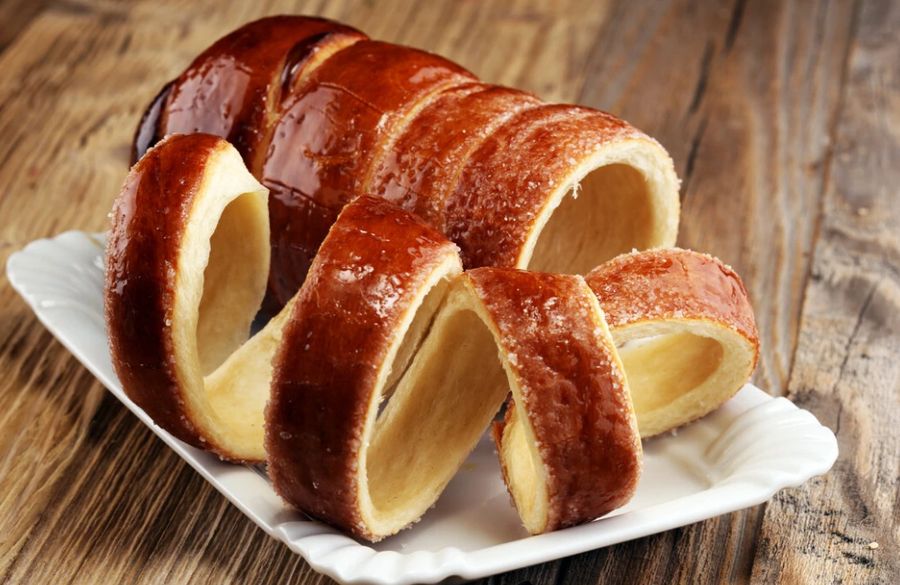
Chimney cake is one of Hungary’s most charming street‑food experiences: a warm, spiral‑shaped pastry that smells of caramelised sugar and draws visitors to kiosks all over Budapest. For US travellers, it is an easy, affordable way to taste local tradition and connect with everyday life in the city.
What Chimney Cake Actually Is
Chimney cake, known in Hungarian as kürtőskalács, is a sweet yeast dough pastry baked on a rotating spit until it forms a hollow, cylindrical “chimney.” Strips of dough are wrapped around a wooden or metal roll, brushed with butter, rolled in sugar, and baked over open coals or in a special oven until the sugar caramelises.
As it cooks, the outside turns shiny and crisp while the inside stays soft and slightly chewy, creating a contrast that makes it surprisingly light despite its size. Once baked, the hot pastry is often rolled in toppings such as cinnamon, cocoa, ground walnut, coconut, or vanilla sugar. Many vendors hand it to you whole, but locals often tear it into strips, unrolling it while they walk through the city.
A Short History of Kürtőskalács
The roots of chimney cake lie in the historical region of Transylvania, which has long cultural ties to Hungary and is now part of Romania. Early versions of the cake appear in 18th‑century cookbooks, including a 1784 recipe by Countess Mária Mikes of Zabola that described a spit‑baked “kürtős kaláts,” though without the sugar coating we know today.
By the 19th century, Hungarian cookbooks recommended rolling the dough in sugar before baking, creating the caramelised crust that defines the modern dessert. Over time it evolved from a festive cake baked for special occasions into a popular fairground and street food sold at markets, festivals, and later in dedicated chimney cake shops. Today you can find it not only across Hungary, but also in cities from Prague to New York, although Budapest is still the most atmospheric place to try it.
Why Chimney Cake Is a Must‑Try in Budapest
For many visitors, the chimney cake becomes a symbol of their time in Budapest, much like gelato in Italy or churros in Spain. Several details make it particularly memorable:
-
The aroma: the smell of caramelising sugar and vanilla often catches your attention before you even see the kiosk.
-
The performance: you can usually watch the dough being rolled, wrapped, and baked right in front of you on rotating spits.
-
The texture: a crisp, glossy exterior surrounding a soft, fluffy inside that pulls apart in long, spiralled strips.
-
The setting: many of the best spots are in postcard‑perfect locations such as Váci Street, City Park, the Castle District, and Christmas markets.
Compared with heavy restaurant meals, chimney cake is a casual treat you can share with friends while exploring the city, making it ideal for families and solo travellers alike.
Classic Flavours and Modern Twists
Traditionally, kürtőskalács is kept fairly simple, focusing on the quality of the dough and the gentle smokiness from charcoal baking. The most common toppings you will see in Budapest include:
-
Cinnamon sugar – a slightly spicy, comforting option many visitors recognise immediately.
-
Vanilla sugar – sweet and aromatic, often considered the most “classic” Hungarian style.
-
Ground walnut or almond – a richer, nutty version that adds texture and flavour.
-
Cocoa or chocolate – a favourite for children and anyone with a sweet tooth.
-
Coconut – light and fragrant, popular in many tourist‑oriented shops.
In recent years, vendors have transformed chimney cake into a playful dessert canvas. You will see “chimney cones” filled with soft‑serve ice cream, versions stuffed with whipped cream or fruit, and even savoury options filled with sausage or vegetable stews. Some places specialise in vegan recipes or lactose‑free ice cream fillings to suit modern dietary preferences.
Where to Eat Chimney Cake in Budapest
One of the pleasures of visiting Budapest is trying chimney cake in different corners of the city, from old‑school stands to creative dessert bars.
Traditional and Charcoal‑Baked Spots
If you want an authentic, charcoal‑baked experience, several local favourites stand out.
-
Édes Mackó / Vitéz Kürtős: located near the Budapest Zoo in City Park, known for baking over charcoal and offering both classic and creative variations.
-
Fitzkey kiosks: small stands scattered around busy intersections and near transport hubs, appreciated for fresh, simply prepared chimney cakes.
-
Christmas market stalls: during the winter season, traditional vendors operate at markets such as Vörösmarty Square and St. Stephen’s Basilica, though prices are higher.
These places focus on the basics: warm cake, good dough, and the satisfying crunch of caramelised sugar straight from the spit.
Central Dessert Shops and Tourist‑Friendly Options
For travellers staying in downtown Budapest, it is easy to try chimney cake between sightseeing stops.
-
Molnár’s Kürtőskalács on Váci Street is perhaps the best‑known central shop, offering many flavours and a steady flow of freshly baked cakes in the heart of the shopping district.
-
Chains such as Chimney Cake Shop have outlets around Váci Street, Fashion Street, and Deák tér, serving popular “chimney cones” filled with soft‑serve ice cream.
-
Gelateria Pichler near Ferenciek tere combines gelato with chimney cake, specialising in flavours like coconut, pistachio, and hot fruit fillings.
These locations are convenient for US visitors who want an easy, reliable introduction without leaving the main tourist routes.
Off‑Beat and Creative Experiences
Food‑loving travellers may enjoy seeking out smaller shops and food trucks that experiment with new fillings and shapes. Some venues host chimney cake workshops where you can roll the dough yourself, learn about the history, and take part in a hands‑on baking class.
A class or tasting tour can be a fun way to learn about Hungarian cuisine beyond goulash and paprika, especially if you enjoy cooking back home.
Practical Tips for US Travellers
Understanding how chimney cake fits into your day helps you enjoy it without overdoing the sugar rush.
-
When to eat it: locals often enjoy kürtőskalács as an afternoon snack, a market treat, or a dessert after a walk rather than as part of a sit‑down meal.
-
Sharing sizes: one full cake is quite generous; many couples and families share one between two or three people, especially when trying multiple flavours.
-
Typical prices: recent guides suggest that in 2025 a chimney cake in Budapest costs roughly 2.5–8 euros, with simple versions at kiosks on the lower end and elaborate filled desserts at the higher end.
-
Cash vs. card: most central shops accept cards, but some smaller kiosks still prefer cash, so keeping a bit of local currency on hand is helpful.
If you visit during the Christmas markets, expect higher prices and longer lines, but also a special atmosphere with lights, music, and mulled wine all around you.
How Chimney Cake Compares to Other European Street Sweets
Travellers who know Central Europe often compare Hungarian kürtőskalács with similar pastries such as Czech trdelník. While they share a spiral shape and spit‑baked method, chimney cake in Hungary is more closely tied to local history and is widely regarded as a national specialty, sometimes even described as a “Hungarikum” (a recognised Hungarian heritage product).
Unlike filled pastries such as croissants or doughnuts, chimney cake is hollow, and you eat it by unwinding the spiral rather than cutting it. That simple ritual—tearing off a strip, feeling the warm steam escape, and tasting the caramelised crust—adds to the sense of place that many visitors bring home in their memories.
Bringing the Experience Home
Even after your trip, chimney cake can continue to be part of your connection with Hungary. Some bakeries abroad offer their own versions under names like kurtos cake, chimney cone, or Hungarian chimney roll. Alternatively, several English‑language recipes explain how to mimic the effect at home using oven‑safe rolling pins or metal tubes instead of outdoor charcoal spits.
While the flavour can be recreated fairly closely, many travellers say that the real magic lies in the setting: the glow of a kiosk, the view of the Danube, or the bustle of a Christmas market while you share a warm, sugary spiral with friends. That combination of simple ingredients and vivid atmosphere is what makes chimney cake one of Hungary’s most beloved—and most photogenic—treats for visitors from the US and around the world.