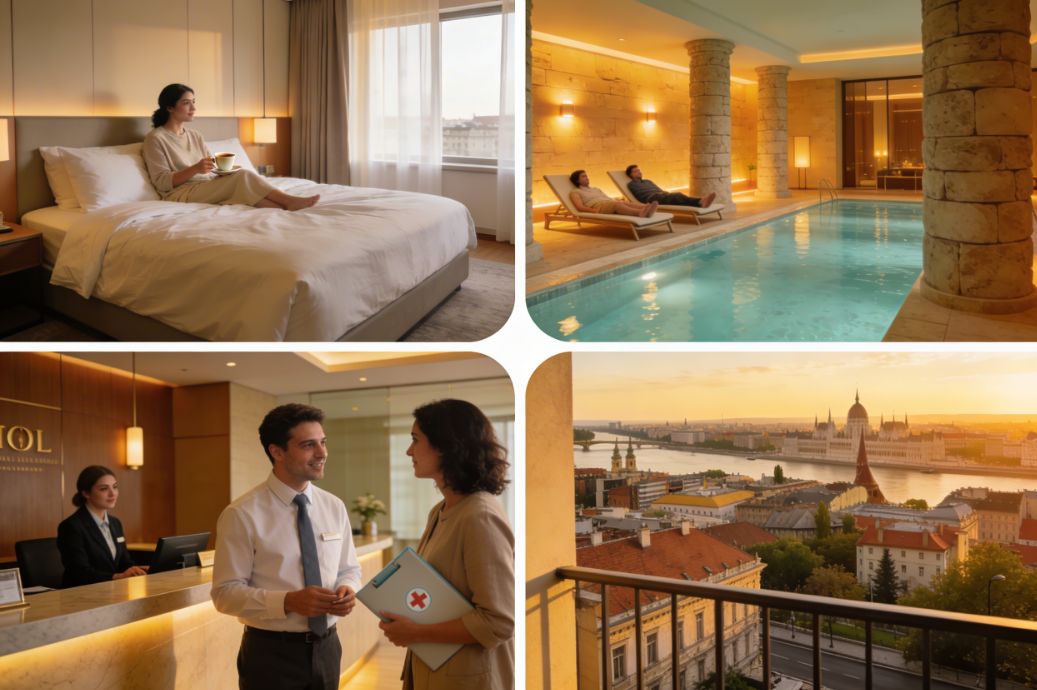
Budapest, capital of Hungary, has quietly become one of Europe’s most attractive destinations for people who combine travel with treatment, and its hotels play a key role in making that journey smooth, safe, and comfortable for medical tourists. From five-star spa palaces to discreet serviced apartments near clinics, the city offers a spectrum of stays that support both recovery and relaxation.
Why Budapest works so well for medical tourists
Budapest blends medical expertise, affordability, and a traditionally health‑focused culture in a way that few cities can match. Many visitors arrive for dental work, cosmetic surgery, orthopaedic treatments, fertility care, or complex diagnostics and choose to stay several days before and after their procedure. Hotels have adapted to this pattern by offering flexible stays, quiet rooms, and added services that support guests who are not just on holiday, but also healing.
The city’s compact layout means that many medical centers, private hospitals, and clinics are within a short ride from central hotels. This reduces stress on treatment days and makes it easy to return to a calm, supportive space once appointments are finished. For international visitors, especially those flying in from North America or Western Europe, this combination of professional care and easy logistics makes Budapest feel reassuringly manageable.
Choosing the right area to stay
For medical tourists, location is more than a matter of convenience. It influences your energy levels, access to green spaces, and how quickly you can reach your clinic.
-
Around the Danube and city center: Ideal if you want beautiful surroundings, gentle walks by the river, and easy access to pharmacies, cafés, and restaurants with lighter, healthier options.
-
Near Andrássy Avenue and the Opera: Good for those combining treatment with culture, where post‑appointment strolls can include boulevards, parks, and museums.
-
Quiet residential districts (such as parts of Buda or outer Pest): Best suited for longer stays, rehabilitation, or more privacy, often with apartment-style hotels that include kitchenettes and extra space.
Many medical tourists choose to stay centrally for the first few days to enjoy the city, then move to a calmer hotel for the period immediately surrounding their procedure. This two‑stage approach lets you make the most of Budapest without over‑tiring yourself when rest becomes the priority.
Five-star comfort for before and after treatment
If your budget allows, Budapest’s five‑star hotels can be an excellent base for medical travel, especially for shorter, more intensive visits. The high level of service, in‑room dining, and spa facilities provide a strong support system in the days before and after treatment.
At the upper end, grand city hotels and riverside properties combine plush bedding, blackout curtains, and soundproofed rooms with professional concierge teams used to accommodating special requests. For medical tourists, this might mean arranging early check‑in, late check‑out, quiet rooms away from elevators, or extra pillows and blankets to help with post‑surgical positioning.
Many of these luxury hotels also have wellness areas: pools, saunas (which you should avoid directly after many procedures, but which can be helpful before), relaxation rooms, and massage services. Even if you’re following strict medical advice, simply having access to calm, aesthetically pleasing spaces makes the psychological side of recovery easier. For relatives or companions traveling with you, these hotels also offer enough on‑site comfort to keep them relaxed while you rest.
Boutique and lifestyle hotels for lighter treatments
Not every medical trip requires intense recovery. Patients visiting for dental work, dermatology, eye surgery, or minor procedures often feel well enough to explore the city between appointments. In these cases, Budapest’s boutique and lifestyle hotels can be a perfect fit.
These properties tend to offer:
-
Central locations within walking distance of restaurants, cafés, and sightseeing.
-
Stylish, well‑designed rooms that feel more like a home than a hospital.
-
Communal spaces such as lounges, libraries, and rooftop terraces where you can relax without feeling confined to your room.
For medical tourists who value atmosphere as much as practicality, boutique hotels provide a sense of emotional uplift: you are in a beautiful place doing something positive for your health, not just “going to the doctor abroad.” Many of these hotels are used to international guests and communicate easily in English, which helps when you need to clarify special dietary needs or ask about quiet, restful spaces.
Apartment‑style hotels and extended stays
For longer treatment plans or rehabilitation that lasts several weeks, apartment‑style hotels and serviced residences become especially attractive. They give you more space, a kitchen, and the feeling of living in Budapest rather than just passing through.
Key benefits for medical tourists include:
-
Kitchen facilities for preparing gentle, doctor‑recommended meals rather than relying entirely on restaurants.
-
Separate living and sleeping areas, which can be helpful when family members or companions are staying with you.
-
Laundry facilities – practical if movement is limited or if you’re instructed to wear certain garments after surgery.
Many of these properties are located in quieter residential streets still close to public transport. For patients who need regular physiotherapy or follow‑up visits, being able to rest in a more “normal” environment, cook light meals, and sit on a sofa rather than in bed can make a big difference to how quickly they feel like themselves again.
Hotel features that matter most for recovery
When choosing a Budapest hotel as a medical tourist, star rating is only one part of the equation. Certain features can significantly improve your comfort and recovery experience:
-
Elevator access and minimal stairs: Essential after surgery or when mobility is reduced.
-
Quiet rooms: Facing inner courtyards or side streets rather than main boulevards, crucial for rest and sleep.
-
Good mattress and bedding quality: Supportive mattresses and adjustable pillows help with pain management and proper sleeping positions.
-
Flexible housekeeping: The ability to request reduced or delayed cleaning, especially if you’re resting during the day.
-
In‑room dining or nearby food delivery: So you don’t need to dress up and go out to eat when you are not feeling your best.
-
Proximity to pharmacies: Budapest has many well‑stocked pharmacies, and being a short walk away simplifies prescription pickups and over‑the‑counter needs.
Hotels that understand medical tourists are often happy to arrange extras such as additional towels, a comfortable chair with armrests, or ice packs if appropriate. A short email before arrival explaining your needs can help the property prepare in advance.
Coordinated care: hotels and clinics working together
One of the advantages of choosing Budapest for medical travel is the growing cooperation between clinics and hotels. Many private medical providers maintain preferred‑partner hotel lists and can recommend options that suit different budgets and levels of care.
Benefits of staying at a hotel recommended by your clinic can include:
-
Pre‑arranged transfers between the airport, hotel, and clinic.
-
Reception staff familiar with your clinic’s location and typical appointment times.
-
Clear instructions on what to expect before and after treatment, already briefed by the medical team.
Some hotels even align breakfast times and flexible check‑out policies with common procedure schedules, ensuring you’re not rushing with luggage on the same morning as surgery or a major appointment. This sense of coordination reduces uncertainty and helps you focus on your health.
Eating well while you heal
Budapest’s culinary scene is rich and often indulgent, but medical tourists may need lighter, more specific diets. A good hotel will support this without making you feel like an exception.
Look for properties that:
-
Offer varied breakfast options, including fresh fruit, yogurt, porridge, and simple proteins.
-
Are located near supermarkets and health‑food shops, if you have access to a kitchenette.
-
Have staff willing to adapt dishes – for example, less salt, no spices, or softer textures after dental work.
In many hotels, room service can prepare plain broths, steamed vegetables, or other simple dishes on request, even if they’re not on the printed menu. Letting the hotel know your situation often makes them more proactive in offering gentle, restorative meal ideas.
Emotional comfort and feeling “looked after”
Medical travel involves more than just the physical dimension. Being in another country for treatment can be emotionally intense, and hotel staff often end up playing a quiet but important supportive role.
Budapest’s better hotels are used to guests who are a little anxious, tired, or uncomfortable. The small gestures matter: a warm greeting when you come back from an appointment, a quick check that everything is okay in your room, or the willingness to print documents and help with local directions without fuss.
For many patients, especially those traveling alone, this creates a sense of being “held” by the city rather than going through the process in isolation. If emotional comfort is important to you, it’s worth reading how guests describe staff attitude and atmosphere, not just facilities, when choosing where to stay.
Combining treatment with light sightseeing
One of Budapest’s strengths as a medical tourism destination is that, when your doctor approves it, you can gently enjoy the city between or after treatments without overexerting yourself. Hotels in good locations make this easier.
From central properties, short, low‑effort activities can include:
-
A relaxed riverfront walk along the Danube at sunset.
-
A quiet coffee or herbal tea on a terrace or in a historic café.
-
A short tram or taxi ride to a viewpoint for a quick photo and fresh air.
Selecting a hotel within easy reach of these softer experiences means you don’t have to plan big excursions to feel that you’ve “seen” Budapest. Instead, healing and discovery blend together naturally.
Safety, cleanliness, and peace of mind
When you’re undergoing medical treatment, hygiene and safety take on heightened importance. Budapest’s better hotels take cleanliness seriously and have robust housekeeping protocols. If you have particular concerns – for instance, about post‑surgery infection risks – you can ask about:
-
Frequency and methods of room cleaning.
-
Availability of fragrance‑free or hypoallergenic linens.
-
Whether they can provide extra blankets or freshly laundered pillows during your stay.
The city itself is considered safe for visitors, and hotel reception teams are usually happy to advise on reliable taxi services, pharmacy locations, and nearby restaurants that offer calm, non‑touristy settings. For medical tourists, this translates into fewer logistical worries and more energy available for recovery.
Making the most of your Budapest medical stay
To get the best from your hotel as a medical tourist in Budapest, a little preparation goes a long way. Before booking:
-
Ask your clinic if they have preferred accommodation partners and why they recommend them.
-
Contact the hotel directly to explain the nature of your visit and any special needs.
-
Check whether early check‑in, late check‑out, or flexible cancellation policies are available around your procedure dates.
Once you arrive, don’t hesitate to communicate openly with reception or guest services. Whether you need extra water, a quieter room, help with arranging a taxi, or directions to the nearest pharmacy, the more they understand your situation, the better they can support you.
Budapest’s hotel scene is evolving in step with its reputation as a leading European medical tourism hub. Here, accommodations are not just a backdrop to your treatment but an active part of the healing journey – spaces designed to offer rest, reassurance, and a gentle touch of beauty at a time when you need it most.