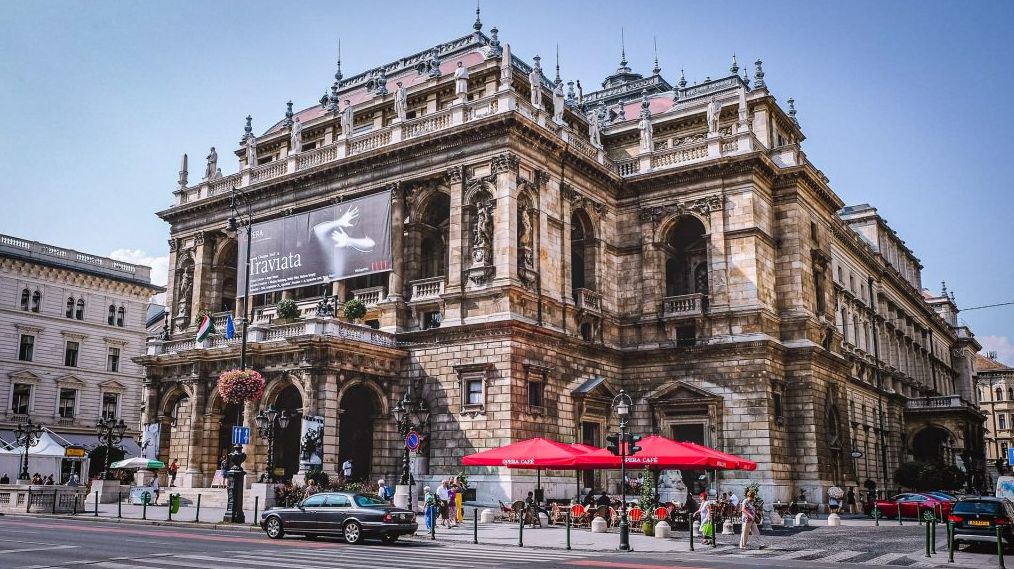
The Hungarian State Opera House in Budapest is one of the city’s most impressive cultural landmarks, blending grand architecture, world‑class acoustics, and a full calendar of opera and ballet in a compact, very walkable part of Pest. For US travelers, it offers both an accessible introduction to European opera and a chance to stand inside a building that genuinely rivals the great houses of Paris and Vienna.
The Opera House stands on the elegant Andrássy Avenue, a UNESCO‑listed boulevard lined with 19th‑century townhouses, boutiques, and cafés, right in central Pest. The “Opera” stop on metro line M1, as well as several bus and trolleybus routes, drop you just steps from the main entrance, making it extremely easy to include in a day of sightseeing.
From the outside, the building presents a richly detailed neo‑Renaissance façade with statues, arches, and flags, often framed by street life, cars, and café terraces along the avenue. At night, warm lighting brings out the stonework and sculpture, and many visitors stop just to photograph the exterior even if they are not attending a performance.
A Short History in Clear Language
The Hungarian State Opera House was built between 1875 and 1884, designed by the architect Miklós Ybl, one of the leading figures of 19th‑century Hungarian architecture. It was funded by the city of Budapest and Emperor Franz Joseph I, with the ambitious goal of matching the prestige of the great opera houses in Vienna and Paris.
The building opened on 27 September 1884, with the emperor present, and quickly became a symbol of Hungary’s cultural life. Over time it survived wars and political changes, saw a major renovation in the 1980s, and most recently underwent a full restoration between 2017 and 2022 that refreshed both the façade and the interior while improving comfort and acoustics.
Architecture and Interior Design
Architecturally, the Opera House is primarily neo‑Renaissance with lavish Baroque details, designed to glorify music and the arts. Outside, sculpted figures, balustrades, and stone ornamentation create a sense of grandeur without overwhelming the human scale of Andrássy Avenue.
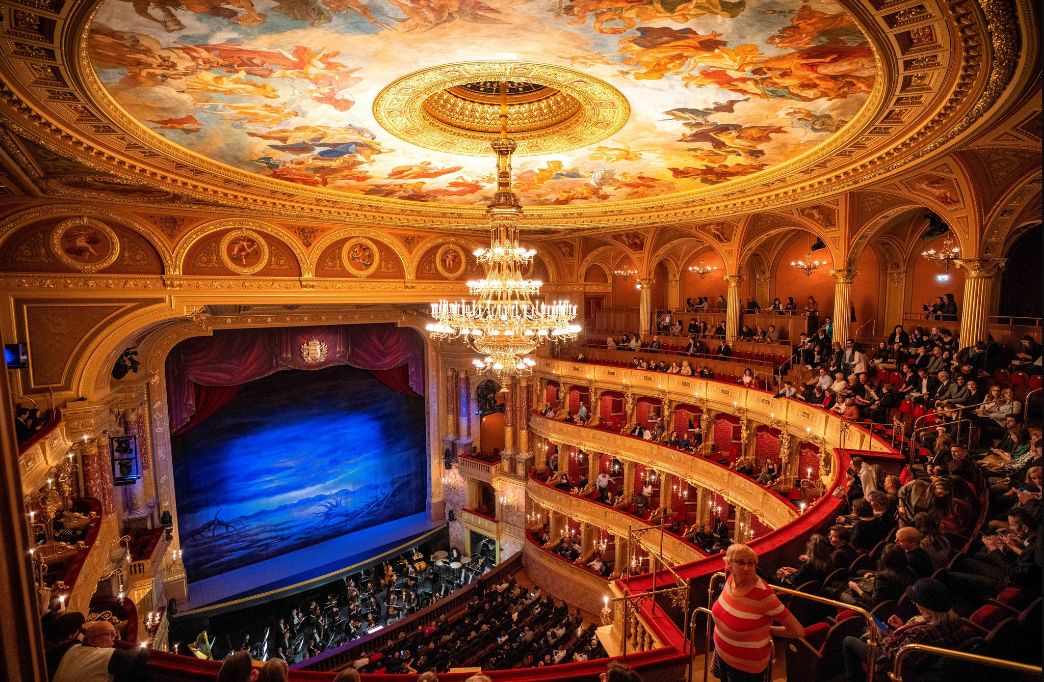
Inside, the experience intensifies: marble, gold leaf, red velvet, and rich frescoes cover staircases, foyers, and the auditorium. The horseshoe‑shaped hall, with its tiers of boxes, ornate ceiling paintings, and a huge central chandelier, has been carefully preserved and now feels both historic and freshly restored.
Acoustics and Capacity
For those who care about sound, the Budapest Opera House is often ranked among the best in Europe. A study in the 1970s placed its acoustics third on the continent, after La Scala in Milan and the Palais Garnier in Paris. The horseshoe design and proportions of the hall help voices and orchestra blend naturally, which you notice even if you are not an expert in classical music.
Today, the auditorium seats around 1,261 people, a reduction from earlier capacity but a number that provides a good balance between intimacy and grandeur. This relatively compact size also means that even seats further from the stage still feel engaged with the performance.
Performances: Opera, Ballet, and Concerts
The Hungarian State Opera House hosts a full season of opera, ballet, and orchestral concerts, usually from September through June. It is home to the Budapest Philharmonic Orchestra, founded in 1853, and regularly stages classics like “Swan Lake,” “The Nutcracker,” “Carmen,” “The Magic Flute,” and “Carmina Burana.”
Programs often mix international staples with Hungarian works, offering visitors a chance to experience something familiar or discover local composers. You can check schedules and ticket prices on the official Opera website, where online booking is straightforward for English‑speaking travelers.
Guided Tours for Non‑Opera Fans
Even if you are not an opera fan, the building itself is worth seeing, and guided tours make that easy. Daily English‑language tours of around 60 minutes typically run in the early afternoon, for example at 13:30, 15:00, and 16:30, though times can vary by season. These tours walk you through the main staircase, foyer, and auditorium, explaining the history, art, and architecture in accessible terms.
For US visitors with limited time or uncertain interest in a full evening performance, a tour is a low‑commitment way to experience the Opera House. Tickets often sell out, so booking at least a week in advance is recommended, especially in high season.
Practical Details: Getting There and Dress Code
The Opera House sits at Andrássy út 22 in the 6th district of Pest. The easiest way to reach it is via the M1 metro line (the historic “yellow line”), getting off at “Opera,” or by bus lines 105 and 178, or trolleybuses 70 and 78, which all stop nearby. Tram lines 4 and 6 stop at Oktogon, about a five‑minute walk down Andrássy Avenue.
Dress codes are more relaxed today than many people expect. For evening performances, smart casual is common: collared shirts, dresses, or neat outfits rather than formal gowns or tuxedos. For guided tours, comfortable sightseeing clothes are perfectly acceptable, though some visitors enjoy dressing up a bit for photos on the grand staircase and balconies.
What It’s Like to Attend a Performance
Attending a performance at the Hungarian State Opera House feels like stepping into a living part of the city’s history. Before the show, the wide main staircase and foyer fill with people chatting, taking photos, and ordering drinks at the buffets on the first and third floors. Ushers guide you to your seat or box, and there is usually enough time to look around the auditorium before the curtain rises.
During intermission, you can explore the different levels, step out to the terrace overlooking Andrássy Avenue, or enjoy a glass of wine or sparkling wine while you soak in the atmosphere. After the performance, there is typically a short window to wander through some of the side halls and admire the décor before heading back out to the boulevard.
Tickets, Seats, and Value for Money
Ticket prices vary widely depending on the production, cast, and seating area, but compared with major US venues, many visitors find performances here to be relatively good value. The ground floor and best boxes are priced higher, while seats on the third level can be significantly cheaper and still offer a strong experience thanks to the excellent acoustics.
Boxes on the first and second levels are sold as a unit, meaning you may need to purchase all the seats in that box, which can be an appealing option for small groups or families. Cloakrooms are available on each floor, and using them is part of the usual opera routine, especially in colder months.
Renovation and Modern Comforts
The recent renovation, completed in March 2022, aimed to preserve Miklós Ybl’s original vision while updating the building for modern audiences. Improvements included restoring the façade and interior decoration, upgrading seating comfort, and refining the acoustics, all while respecting the historic character of the Opera House.
As a result, the building looks particularly fresh today, with restored frescoes, polished marble, and renewed red and gold finishes. For US travelers used to either very modern venues or older spaces that feel worn, Budapest’s Opera strikes a rare balance between authenticity and up‑to‑date comfort.
Who Will Enjoy the Budapest Opera House Most?
The Opera House appeals to a wide range of visitors:
-
Classical music and opera fans who want to experience performances in one of Europe’s great halls.
-
Architecture and design enthusiasts interested in 19th‑century neo‑Renaissance and Baroque interiors.
-
Casual travelers who enjoy memorable “only in Europe” experiences, even if they are not regular opera‑goers at home.
-
Photographers and content creators looking for dramatic indoor spaces with chandeliers, balconies, and ornate detail.
Families, couples, and solo travelers all find it accessible, especially thanks to the guided tours that remove the pressure of understanding every detail of an opera or ballet. As long as you appreciate architecture or performance, you are likely to find something rewarding here.
Visit Tips for US Travelers
A few simple strategies can help you make the most of your visit:
-
Check the official Opera website for current schedules, tours, and ticket availability before you arrive in Budapest.
-
If you want a performance, consider booking in advance, especially for popular titles or prime weekends.
-
Build in time to explore Andrássy Avenue before or after your visit, as the area is full of cafés, restaurants, and shops.
-
Use the guided tour option if you prefer a daytime, one‑hour introduction over a full evening performance.
-
Plan for cloakroom use and intermission traditions so you can relax and enjoy the local opera culture.
With its rich history, architectural beauty, and world‑class acoustics, the Hungarian State Opera House is more than just another stop on a city tour. For many US travelers, it becomes one of the standout memories of Budapest, whether they come for a full performance, a guided tour, or simply a chance to stand under its chandelier and take it all in.