Hungary offers a rich calendar of public, national, and bank holidays that weave together centuries of history, Christian traditions, and modern European influences. For UK and US visitors and expats living in Budapest or beyond, understanding these dates is essential for planning travel, banking, and everyday activities.
Overview of Hungarian Holidays
Hungary’s official public holidays are set by law, and most of them double as bank holidays, meaning shops, offices, and financial institutions typically close or operate on reduced hours. Many of these dates also carry strong cultural and historical significance, so you will often encounter parades, concerts, and family gatherings across the country.
From New Year’s Day through to Christmas, Hungary balances solemn national remembrance days with joyful folk traditions, religious feasts, and patriotic events. For anyone visiting from the UK, these holidays are an excellent opportunity to experience authentic local customs, but they can also affect transport schedules, business opening times, and even travel prices.
New Year’s Day – Újév (1 January)
New Year’s Day is a public and bank holiday in Hungary, and it marks the start of the year with a focus on family, rest, and good fortune for the months ahead. Most Hungarians spend New Year’s Eve (Szilveszter) celebrating at home or in city-centre parties, then use 1 January to recover, visit relatives, and share traditional dishes said to bring luck.
In Budapest, many shops, banks, and government offices remain closed on New Year’s Day, while public transport runs on a holiday timetable. If you are travelling from the UK, it is wise to stock up on essentials before the 31 December evening, as supermarkets and smaller stores often operate shorter hours around this time.
National Day – 15 March
The first major national holiday of the year is 15 March, commemorating the Hungarian Revolution of 1848 against Habsburg rule. This is both a public and bank holiday, and it carries a distinctly patriotic tone, with official ceremonies, speeches, and wreath-laying at historical monuments.
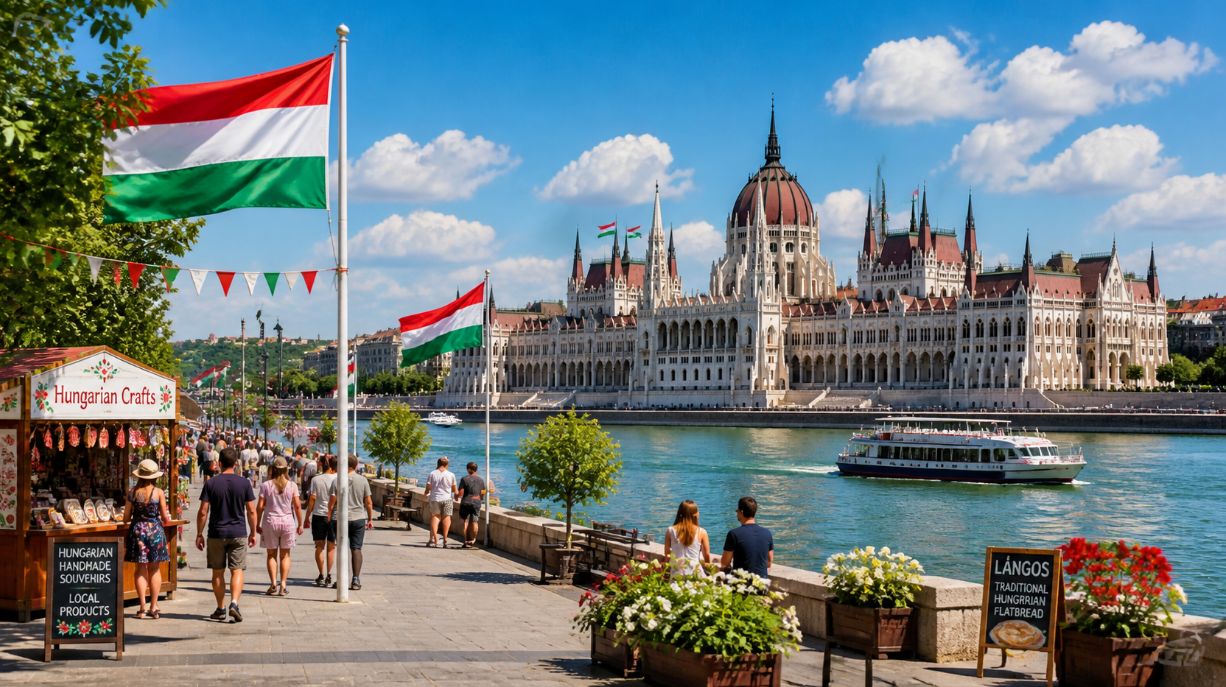
In central Budapest, you will see the national tricolour flag displayed prominently, and many locals wear a small cockade (kokárda) in red, white, and green pinned to their clothing. Key sites such as the Hungarian Parliament, the National Museum, and various squares host free cultural programmes, music performances, and family events, so it is a great day for visitors to immerse themselves in local history.
Good Friday – Nagypéntek (movable)
Good Friday was introduced as an official public and bank holiday more recently, aligning Hungary more closely with other European countries that recognise the Christian Easter period. Because Easter is a movable feast, Good Friday’s date changes each year, typically falling between late March and April.
On this day, schools, banks, and many businesses are closed, and the atmosphere is generally calm and reflective. Churches hold special services, and for travellers from the UK, this can be a particularly good time to witness local religious traditions in both Budapest and smaller towns, although you should plan ahead for reduced shop opening hours.
Easter Sunday and Easter Monday – Húsvét
Easter Sunday and Easter Monday are core parts of Hungary’s spring holiday period, with Easter Monday recognised as a public and bank holiday. Easter Sunday is devoted to church services and family meals, while Easter Monday is famous for a playful folk tradition known as “locsolkodás”.
Locsolkodás involves men visiting female relatives, neighbours, and friends to “sprinkle” them with water or, more commonly today, perfume, in exchange for painted eggs, chocolate, or small treats. For visitors, villages and smaller towns offer the most authentic glimpse of this tradition, while in cities you may encounter modern versions or organised cultural demonstrations centred on Easter customs.
Labour Day – A munka ünnepe (1 May)
Labour Day on 1 May is both a public and bank holiday, shared with many European countries as a celebration of workers’ rights and springtime. In Hungary, this date usually combines political or trade union events with festivals, open-air concerts, and funfairs, especially in parks and public spaces.
In Budapest, popular gathering points include City Park (Városliget) and Margaret Island, where families take advantage of the warmer weather to enjoy picnics and outdoor activities. Many shops and offices close, and public transport follows a holiday schedule, so UK visitors should check timetables in advance if they are planning excursions or airport transfers.
Pentecost Sunday and Monday – Pünkösd (movable)
Pentecost, occurring fifty days after Easter, brings another long weekend in Hungary, with Pentecost Monday observed as a public and bank holiday. The celebration has Christian roots but also blends with older folk traditions, especially in rural areas where you may find festivals featuring traditional costumes, dance, and music.
Cultural programmes often showcase Hungarian folk arts, crafts, and gastronomy, making this period ideal for visitors eager to explore beyond Budapest and experience life in smaller towns or wine regions. As with other holidays, banks and many businesses close on the Monday, and some tourist attractions may operate shorter hours.
State Foundation Day – 20 August
20 August is one of the most important national holidays in Hungary, commemorating both the foundation of the Hungarian state and Saint Stephen, the country’s first king and patron saint. It is a public and bank holiday marked by grand celebrations, religious ceremonies, and a spectacular fireworks display over the Danube in Budapest.
Throughout the day, visitors can enjoy air shows, concerts, and special events around the Buda Castle district, the Danube embankments, and central squares. In the evening, thousands gather along the riverbanks to watch the fireworks, so if you are visiting from the UK during this period, you should plan your accommodation and vantage points well in advance.
National Day – 23 October
Hungary’s other major modern national day falls on 23 October, marking the 1956 Hungarian Revolution and the proclamation of the Third Hungarian Republic in 1989. This public and bank holiday is a day of remembrance and reflection, with official ceremonies, wreath-laying, and exhibitions focused on the fight for freedom and democracy.
In Budapest, the area around Kossuth Square and other key revolutionary sites hosts speeches and commemorative events. Many museums and cultural institutions offer themed programmes about 1956, often with free or discounted admission, making this an informative time for history-minded travellers.
All Saints’ Day – Mindenszentek (1 November)
All Saints’ Day on 1 November is a quiet, contemplative public and bank holiday in Hungary. Families visit cemeteries to honour deceased relatives, decorating graves with candles and flowers that create a moving sea of light after dark.
For visitors, this is a striking and respectful way to glimpse local customs surrounding remembrance and family ties. Most banks and many shops are closed or operate with limited hours, and public transport follows a holiday schedule, so it is wise to plan your day around the more subdued rhythm of the city.
Christmas Eve – Szenteste (24 December)
Although Christmas Eve is not always classified as a full public holiday in a strict legal sense, in practice it behaves like one in Hungary. Many businesses, shops, and offices close early or remain shut, and families gather at home for the main Christmas celebration, including the festive dinner and gift-giving.
Christmas markets in Budapest usually run through December, so visitors can enjoy mulled wine, traditional chimney cake, and handicrafts in the days leading up to Christmas Eve. However, by the evening of the 24th, streets become much quieter, public transport reduces, and restaurants may require advance bookings or may be closed altogether.
Christmas Days – 25 and 26 December
Both 25 December (Christmas Day) and 26 December (Boxing Day or Second Day of Christmas) are official public and bank holidays in Hungary. These days are largely reserved for family visits, long lunches, and a relaxed festive atmosphere at home.
Most banks and many shops remain closed on these days, though larger shopping centres may reopen partially on the 27th or after the main holiday period. If you are travelling from the UK, consider planning indoor activities such as spa visits, walks along the Danube, or exploring Christmas lights, as popular attractions may have modified opening hours.
Other Observances and Name Days
In addition to official public and bank holidays, Hungary observes a range of other significant dates and traditions that shape the cultural calendar. While these may not be associated with closures or bank regulations, they still influence local life, events, and seasonal patterns.
One of the most charming aspects of Hungarian culture is the celebration of name days (névnap), which are linked to the Catholic calendar of saints’ days. Many Hungarians celebrate their name day almost as enthusiastically as their birthday, and you may notice calendars and diaries highlighting which names are being honoured on any given date.
How Holidays Affect Public Life
For UK visitors, one of the most important practical aspects of Hungarian holidays is the impact on everyday services and activities. On official public and bank holidays, banks are closed, government offices do not operate, and many smaller shops and services take the day off.
Larger supermarket chains, especially in cities, may open for reduced hours on certain holidays but are often closed on the most significant dates such as 1 January, 20 August, and the two Christmas days. Public transport usually follows a Sunday or holiday timetable, which means fewer services but still reasonable coverage in Budapest and major towns.
Planning Travel Around Hungarian Holidays
If you are visiting Hungary from the UK, aligning your trip with national or religious holidays can be both a challenge and a rewarding opportunity. During major holidays like 15 March, 20 August, and Christmas, popular destinations such as Budapest, Lake Balaton, and spa towns may see increased demand for accommodation.
At the same time, the rich programme of parades, concerts, fireworks, and cultural festivals offers a deeper, more authentic travel experience than on ordinary weekdays. To make the most of this, consider booking hotels and key attractions in advance, especially if your visit coincides with a long weekend or a flagship national celebration.
Bank Holidays and Financial Services
Hungary’s bank holidays generally mirror the official public holidays, meaning banks remain closed for face-to-face services on these dates. However, ATMs and digital banking platforms continue to operate, so you can still access cash and manage payments while travelling.
International transfers and some financial operations may be delayed if they coincide with Hungarian or overlapping foreign bank holidays. If you need to exchange currency, arrange larger withdrawals, or make in-branch enquiries, it is best to handle these tasks on regular working days and avoid relying on holiday dates.
Public Holidays and Retail Opening Hours
Retail opening hours in Hungary vary significantly between ordinary days and public holidays, and also between large cities and smaller towns. On major holidays, shopping centres and high street stores often close completely, while on lesser holidays some may operate with reduced hours.
Tourist-heavy areas in Budapest may keep specific shops, restaurants, and cafés open, especially around the Christmas markets and during summer events. Nevertheless, it is wise to check local listings and websites ahead of your visit, as holiday opening times can differ even between branches of the same chain.
Experiencing Hungarian Holiday Traditions
One of the advantages of planning your stay around Hungarian holidays is the chance to experience living traditions first-hand. Whether you stroll along the Danube during the 20 August fireworks or join locals in visiting cemeteries on All Saints’ Day, each holiday reveals a different facet of Hungarian identity.
Spring holidays such as Easter and Pentecost often feature folk dancing, music, and handicraft markets, especially in smaller towns, ethnographic museums, or open-air heritage villages. In winter, Christmas markets, hot wine, and seasonal food create a cosy atmosphere, particularly in Budapest’s main squares and historic streets.
Tips for UK / US Visitors and Expats
For UK travellers and expats, navigating the Hungarian holiday calendar becomes much easier with a few practical guidelines. First, always check the official list of public and bank holidays for the current year, as movable feasts like Easter and Pentecost change dates annually.
Second, build some flexibility into your itinerary in case a planned museum visit or shopping trip falls on a holiday when opening hours are shortened. Third, embrace the opportunity to join local celebrations, whether that means attending a parade, visiting a festival, or simply sharing a traditional meal in a local restaurant that remains open.
Final Thoughts on Hungarian Holidays
Hungary’s public, national, and bank holidays offer far more than just days off work; they provide a living calendar of the country’s history, faith, and cultural values. For visitors and expats from the UK, absorbing these rhythms helps transform a simple city break or seasonal trip into a deeper, more memorable experience.
By planning ahead around bank closures, transport schedules, and opening hours, you can enjoy the best of both worlds: smooth, stress-free travel logistics and unforgettable encounters with Hungary’s most cherished traditions.
FAQ: Public, National and Bank Holidays in Hungary
1. How many public holidays does Hungary have each year?Hungary typically has around a dozen official public holidays each year, including fixed dates like 15 March and 20 August, plus movable feasts such as Easter and Pentecost. The exact number can vary slightly depending on how movable holidays fall in the calendar.
2. Are Hungarian public holidays also bank holidays?In practice, almost all Hungarian public holidays are also bank holidays, so banks and most offices close on those dates. ATMs and online banking remain available, but in-person services and processing times can be affected.
3. Do shops and supermarkets close on Hungarian holidays?Many shops, especially smaller businesses, close on major holidays such as New Year’s Day, 20 August, and Christmas. Larger supermarket chains may open for reduced hours on some holidays, but it is always best to check local opening times in advance.
4. Which Hungarian holidays are most interesting for tourists from the UK or US?Key dates for visitors include 15 March, 20 August, and 23 October for national celebrations, and the Christmas period for markets and festive events. These holidays often feature parades, concerts, fireworks, and seasonal markets, especially in Budapest.
5. Is public transport in Hungary running on holidays?Yes, public transport usually runs on a Sunday or holiday timetable during official holidays. Services are less frequent, but major city routes and intercity connections generally remain in operation.
6. Are US and UK embassies in Budapest open on Hungarian holidays?US and UK embassy services in Budapest typically observe both their own national holidays and some Hungarian holidays, so opening days can be limited. Always check the official embassy website for current consular opening hours before planning a visit.
7. Do employers in Hungary have to give paid leave on public holidays?Under Hungarian labour regulations, employees normally receive paid leave on official public holidays, unless they work in sectors that must operate continuously, such as hospitality or emergency services. In those cases, different compensation rules or time off in lieu may apply according to the employment contract.
8. How do Hungarian holidays affect UK and US travellers’ finances?On bank holidays, in-branch banking is unavailable and some international transfers may be delayed, but card payments and ATMs still work. Currency exchange offices and tourist-focused services may use holiday opening hours, so it is wise to plan cash withdrawals in advance.